Resilience in Action
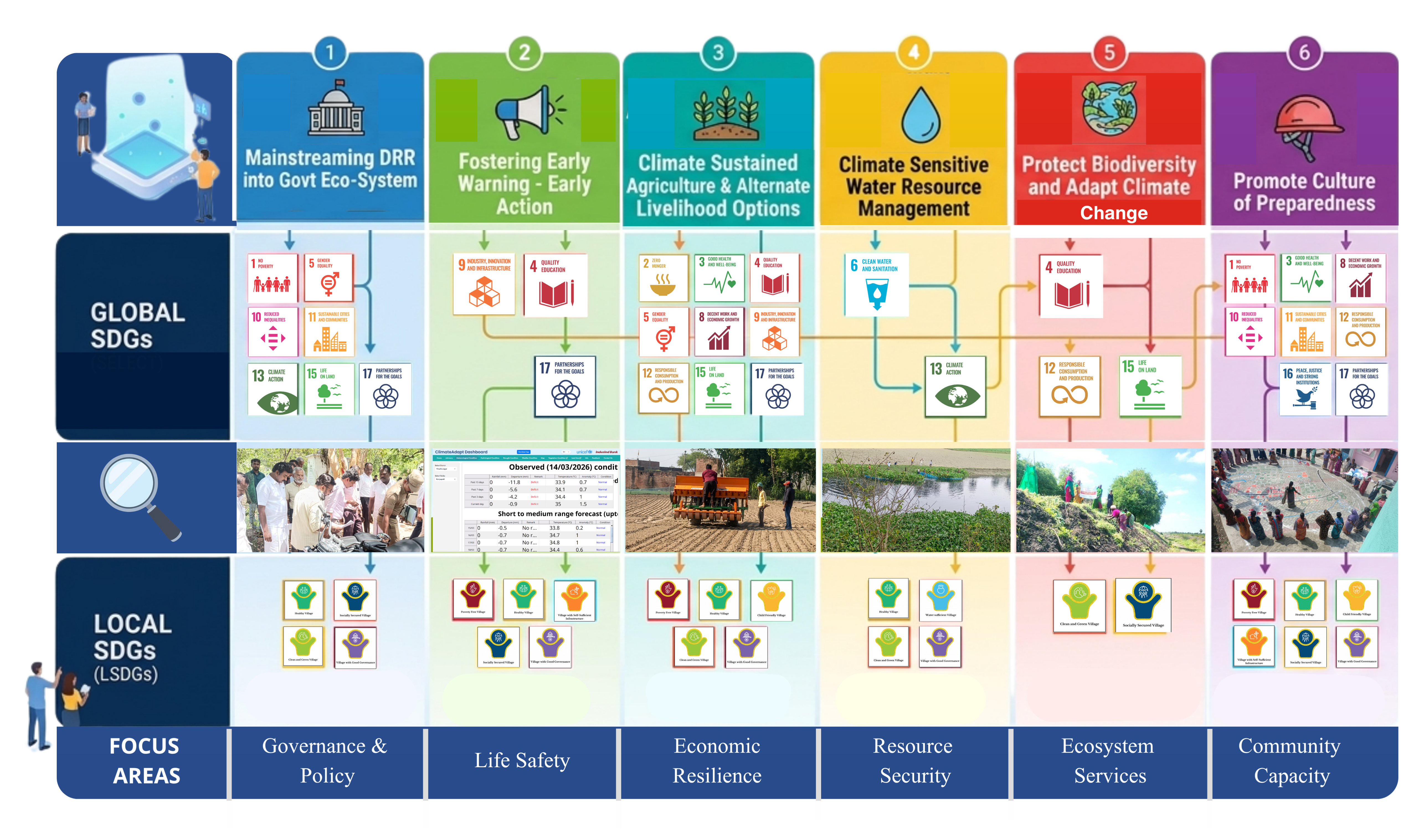
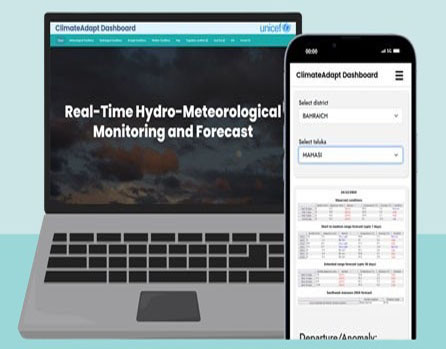
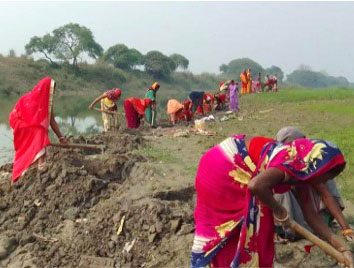
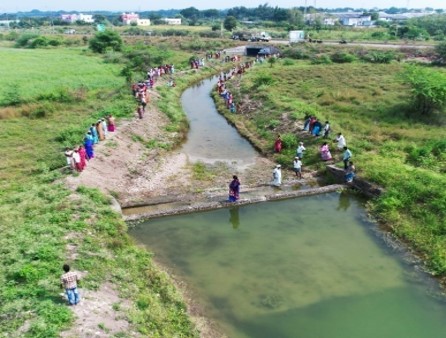
To bring our vision of resilient communities to life, the project “Disaster Resilience Management through Climate Risk Informed Programming with Systemic Change” is anchored in a strategic framework of six interconnected themes. These pillars link high‑level policy with grassroots action, ensuring resilience is embedded across society from government decision‑making to village farmlands. By integrating risk‑informed governance and real‑time early warning systems with nature‑based solutions such as water rejuvenation and biodiversity protection, the project builds a holistic “ridge‑to‑valley” shield for communities affected due to recurrent disasters. Our goal is not only to confront the immediate threats of climate change but also to reshape systems for long‑term security. This approach nurtures a culture of preparedness, strengthens livelihoods, and advances sustainable, climate‑resilient development for generations to come.
Thematic Targets
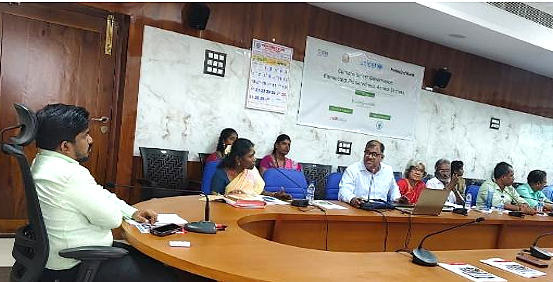

Footsteps Towards SDGs and LSDGs
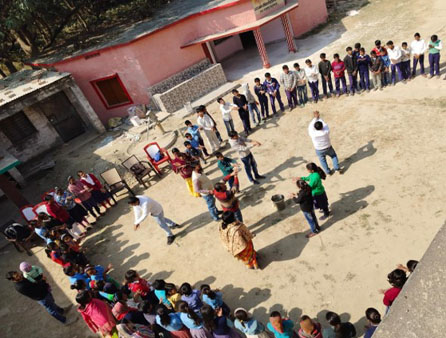
The project is built on the understanding that resilience cannot be achieved through isolated interventions, but through interconnected systems that influence governance, livelihoods, ecology, and community decision-making. Through six thematic pillars, the project creates a framework where risk reduction becomes a part of everyday development planning rather than a response limited to disasters . The approach reflects a strong alignment with the Sustainable Development Goals (SDGs) and Local Sustainable Development Goals (LSDGs) by addressing resilience as both a developmental and environmental priority. It strengthens the relationship between local institutions and vulnerable communities, ensuring that preparedness, adaptation, and recovery are embedded within governance structures. Simultaneously, it recognizes that sustainable livelihoods and ecological protection are deeply linked, where economic security depends on the health of natural systems. By promoting local ownership, decentralized planning, and long-term behavioral change, the project shifts resilience from being programme-driven to community-sustained. This creates a model where local action contributes directly to global sustainability commitments, making resilience both measurable and lasting.