
Theme 3
Promoting climate sustained agriculture and other livelihood practices
SDG Alignment





LSDG Alignment



Summary
Across India’s aspirational districts, climate change is threatening livelihoods and pushing small farmers, forest-dependent communities, and other vulnerable groups into poverty and migration. A shift toward resilience is emerging as both necessity and opportunity. By integrating climate-smart practices with local knowledge and policy support, these regions can turn vulnerability into sustainable development. The vision focuses on adapting livelihoods to climate stress while reducing ecological harm. Agroecology replaces chemical-intensive farming, rainwater harvesting revives water-scarce fields, and renewable energy supports rural enterprises. Women’s collectives build circular economies by converting waste into income, while digital tools deliver weather alerts and market access. These measures protect incomes from climate shocks and align with SDG 13 (Climate Action) and SDG 8 (Decent Work and Economic Growth). For communities, resilience means food security, diversified incomes, and preserved traditions. For governments, it reduces disaster relief costs, supports carbon targets, and enables inclusive growth. Schemes like the National Adaptation Fund and MGNREGA can converge with grassroots innovations to scale solutions, including drought-resistant crops in Tamil Nadu and flood- and heat-resistant varieties in Uttar Pradesh and Bihar. Key challenges remain in financing, awareness, and last-mile delivery. However, the outcome is a shift from vulnerability to sustainable, climate-resilient growth across regions.
From vulnerable mono-cropping To diversified, climate-smart economies
Regular Meetings with Various Livelihood Groups to Understand the
Climate Change Impacts
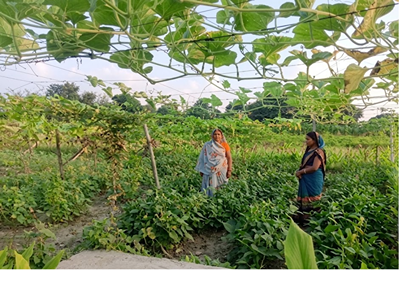
1179 Nutrition garden established across 3 districts

228 farmers adopt Mushroom farming for sustainable income
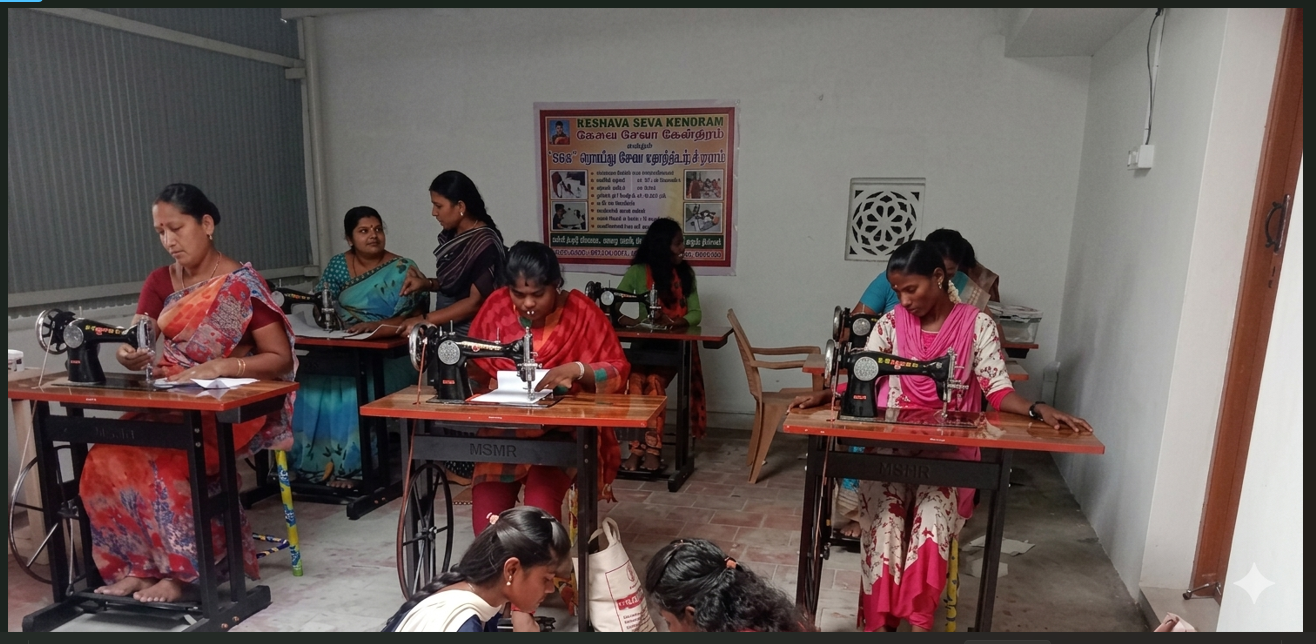
179 women trained in alternative livelihoods through KVK, RSETI, and TNSRLM
Lead Farmers Adopting Climate-Smart Practices and leading the
communities to replicate.
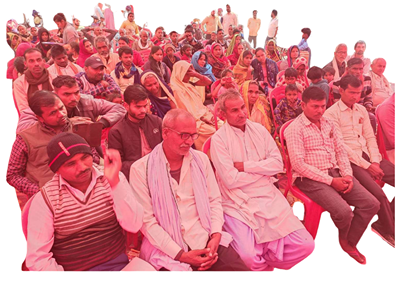
431 Lead farmers trained on Climate resilient Agriculture Practices
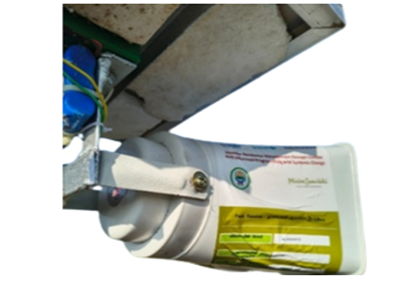
235 sq.km of farmland protected from damage due to attack of stray animals
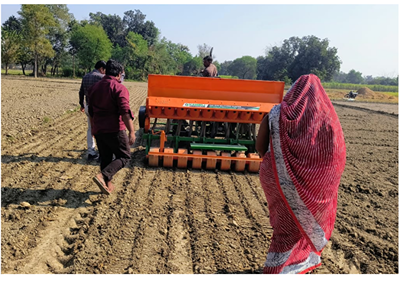
35 acres of farmland cultivated through line sowing method.